
Support for Healthy Microbial Balance
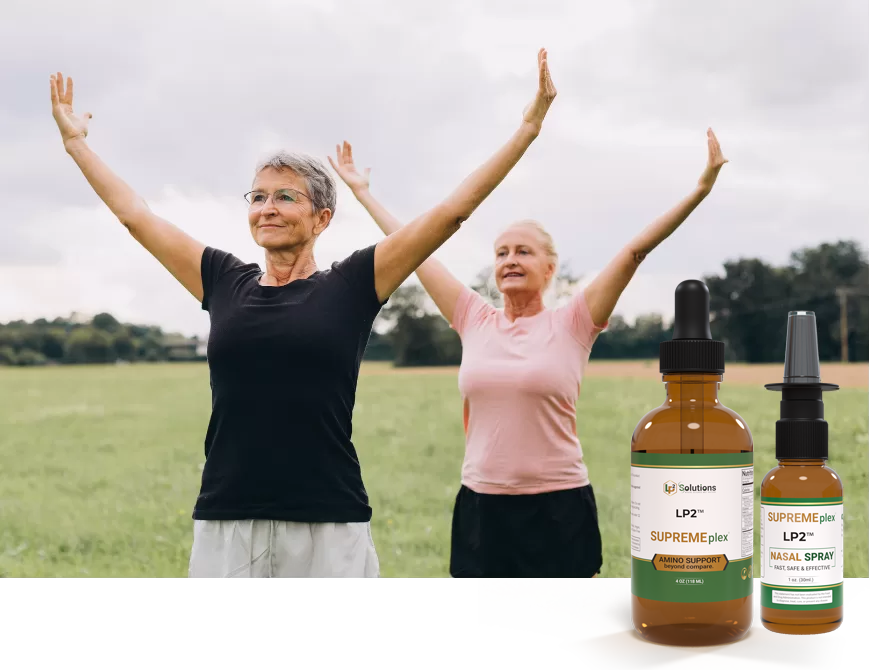
Every day, our bodies encounter a wide variety of microorganisms. Maintaining balance relies on the full support of our immune system—from white blood cells to antibodies—which depends on essential amino acids to build new cells and support natural immune defenses.
SUPREMEplex™ LP² includes two amino acids that have been the subject of significant research for their roles in these processes: L-Lysine and L-Histidine. There’s a reason you find both in our formula.
L-Lysine L-Lysine is an essential amino acid studied for its contributions to the body’s natural antimicrobial mechanisms. Research has shown that lysine can be incorporated into antimicrobial peptides (AMPs)—natural molecules that help the immune system maintain microbial balance. When multiple lysine units link together, they can form structures such as epsilon-poly-L-lysine, which has been researched for its properties in food preservation and microbial control applications.
In the human body, lysine-rich AMPs such as cathelicidins, defensins, and histatins support mucosal defenses and immune function by interacting with microbial membranes.
L-Histidine L-Histidine is another essential amino acid included in SUPREMEplex™ LP². It serves as the precursor to histamine, a compound central to normal immune signaling and the body’s inflammatory response. Histamine helps support white blood cell activity and contributes to natural defense mechanisms, including stomach acid production.
Like lysine, histidine is also found in certain antimicrobial peptides such as histatins (present in saliva), which have been studied for their interactions with microbial membranes and support of mucosal defenses.
The comprehensive LP² matrix in SUPREMEplex™ LP² further includes bromelain (a proteolytic enzyme), N-Acetyl Cysteine (NAC), and L-Glutathione. These ingredients are studied for complementary properties that support the body’s ability to maintain healthy microbial balance. Bromelain has been researched for its ability to help break down microbial biofilms through protein degradation. NAC is widely studied for its capacity to disrupt both bacterial and fungal biofilms (including Candida) and support the body’s natural defenses. L-Glutathione provides powerful antioxidant support that helps protect cells during immune activity against microbes and contributes to overall microbial equilibrium.
Together, these components work synergistically as part of SUPREMEplex™ LP² to support immune function, healthy inflammatory response, natural detoxification pathways, and the body’s own ability to maintain microbial balance.
References
- Blount KF, Wang JX, Lim J, Sudarsan N, Breaker RR. Antibacterial lysine analogs that target lysine riboswitches. Nature chemical biology. 2007 Jan 1;3(1):44-9.
- Branco AC, Yoshikawa FS, Pietrobon AJ, Sato MN. Role of histamine in modulating the immune response and inflammation. Mediators of inflammation. 2018;2018(1):9524075.
- Brosnan ME, Brosnan JT. Histidine metabolism and function. The Journal of Nutrition. 2020 Oct 1;150:2570S-5S.
- Cole AM, Ganz T. Defensins and other antimicrobial peptides: innate defense of mucosal surfaces. Colonization of mucosal surfaces. 2005 Jan 17:17-34.
- Kao C, Lin X, Yi G, Zhang Y, Rowe-Magnus DA, Bush K. Cathelicidin antimicrobial peptides with reduced activation of toll-like receptor signaling have potent bactericidal activity against colistin-resistant bacteria. MBio. 2016 Nov 2;7(5):10-128.
- Oppenheim FG, Xu T, McMillian FM, Levitz SM, Diamond RD, Offner GD, Troxler RF. Histatins, a novel family of histidine-rich proteins in human parotid secretion. Isolation, characterization, primary structure, and fungistatic effects on Candida albicans. Journal of Biological Chemistry. 1988 Jun 5;263(16):7472-7.
- Sundaran S, Kok LC, Chang HY. Combination effect of epsilon-poly-L-lysine and antibiotics against common bacterial pathogens. The Journal of Antibiotics. 2022 Jun;75(6):354-9.
- Tan Z, Shi Y, Xing B, Hou Y, Cui J, Jia S. The antimicrobial effects and mechanism of ε-poly-lysine against Staphylococcus aureus. Bioresources and Bioprocessing. 2019 Dec;6(1):1-0.
- Wang G. Human antimicrobial peptides and proteins. Pharmaceuticals. 2014 May 13;7(5):545-94.