
Support for Healthy Inflammatory Response
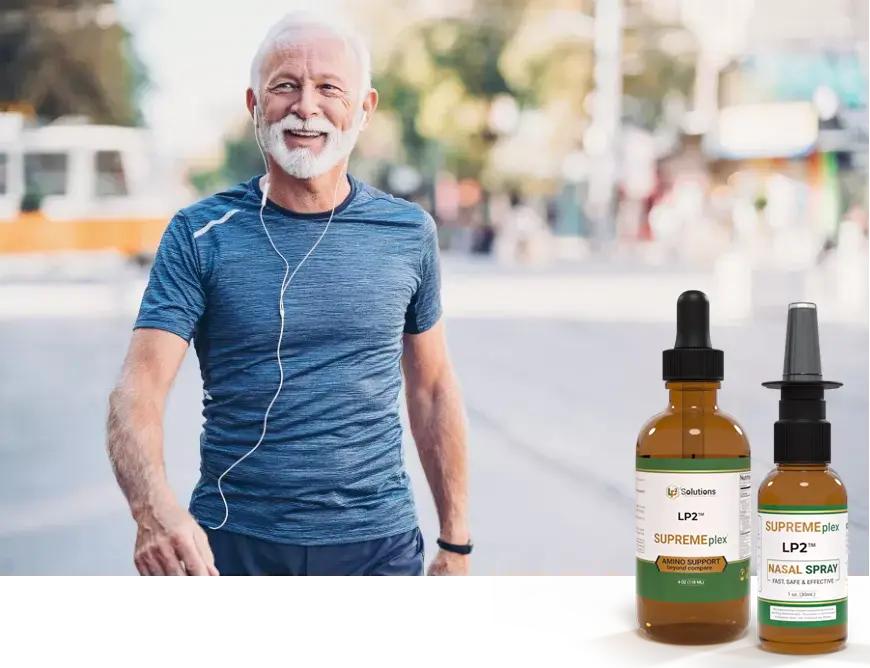
The body’s natural inflammatory response is an essential part of immune defense and tissue repair. Maintaining a healthy inflammatory balance relies on multiple systems, including proteolytic enzymes, antioxidants, and amino acids that help regulate signaling pathways and support cellular health.
SUPREMEplex™ LP² is formulated with a comprehensive LP² matrix that includes ingredients studied for their roles in supporting the body’s ability to manage inflammation.
Bromelain Bromelain, a proteolytic enzyme derived from pineapple, has been extensively researched for its contributions to healthy inflammatory responses. Studies show that bromelain can help modulate key inflammatory pathways, including the reduction of pro-inflammatory cytokines and mediators such as TNF-α, IL-6, and PGE2. It has been studied for its ability to support tissue comfort and normal recovery processes through protein degradation and fibrinolytic activity.
L-Lysine and L-Histidine The LP² matrix also delivers L-Lysine and L-Histidine — two amino acids researched for their involvement in immune and inflammatory processes. L-Histidine serves as a precursor to histamine, a molecule central to normal immune signaling and the body’s inflammatory response. Histidine has been studied for its ability to influence NF-κB activity and help regulate the release of certain pro-inflammatory factors in immune cells. L-Lysine, while primarily noted for its role in antimicrobial peptides, also contributes to overall protein synthesis and cellular repair mechanisms that support tissue health during inflammatory activity.
N-Acetyl Cysteine (NAC) and L-Glutathione NAC and L-Glutathione provide additional antioxidant support within the LP² matrix. NAC is widely studied for its capacity to replenish glutathione levels and help reduce oxidative stress, which can influence inflammatory markers such as CRP and IL-6. L-Glutathione, a master antioxidant, helps protect cells from oxidative damage and contributes to the body’s natural ability to maintain balanced inflammatory responses.
Together, these components — bromelain, NAC, L-Glutathione, and the amino acids in the LP² matrix — work synergistically in SUPREMEplex™ LP² to support immune function, healthy inflammatory response, natural detoxification pathways, and overall microbial balance.
References
- Pavan R, et al. Properties and Therapeutic Application of Bromelain: A Review. Biotechnol Res Int. 2012;2012:976203.
- Insuan O, et al. Anti-Inflammatory Effect of Pineapple Rhizome Bromelain through Downregulation of the NF-κB- and MAPKs-Signaling Pathways in Lipopolysaccharide (LPS)-Stimulated RAW264.7 Cells. Molecules. 2022;27(5):1624.
- Chakraborty AJ, et al. Bromelain a Potential Bioactive Compound. Molecules. 2021;26(14):4313.
- Rathnavelu V, et al. Potential role of bromelain in clinical and therapeutic applications. Biomed Rep. 2016;5(3):283-288.
- dos Santos Tenório MC, et al. N-Acetylcysteine (NAC): Impacts on Human Health. Antioxidants. 2021;10(7):967.
- Askari M, et al. The effects of N-Acetylcysteine on serum level of inflammatory biomarkers in adults: A systematic review and meta-analysis of randomized controlled trials. Cytokine. 2020;136:155282.
- Ghezzi P. Role of glutathione in immunity and inflammation in the lung. Int J Gen Med. 2011;4:105-113.
- Zheng X, et al. The role of amino acid metabolism in inflammatory bowel disease. Front Immunol. 2023;14:1123912.
- Andou A, et al. Dietary Histidine Ameliorates Murine Colitis by Inhibition of Proinflammatory Cytokine Production from Macrophages. Gastroenterology. 2009;136(2):564-574.